Be Prepared ...Use Kubota

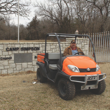
As Karr’s primary means of transportation on the camp, he finds the Kubota utility vehicle to be perfect for the rocky terrain found throughout Camp Simpson.
“I don’t use my pickup truck or the John Deere Gator to get around camp anymore. The RTV is the perfect vehicle. It allows me to carry my tools and even ladders around camp in a fuel efficient manner. It is a smoother ride than “The Gator” and it’s dependability is unbeatable,” said Karr.
Before the decision to purchase the Kubota equipment from Great Plains, Karr used the John Deere Gator as his utility vehicle for the camp. When asked to compare the two utility vehicles, this is what Karr said:
“The Gator hardly gets used anymore. Camp Directors use it to get around from time to time but that’s about it. I could take a 16 foot Skeeter bass boat and put that on the back of the Kubota, pull it and launch it in our lake, Sam Noble, but I couldn’t do that with the John Deere Gator. The Gator just squashes down to much, so the rear shocks on that Kubota are just fantastic. I love the fact that I can pull a 16 foot flat bed trailer around to haul things. The Kubota RTV allows me to work around the camp in a convenient and efficient manner,” Karr said.
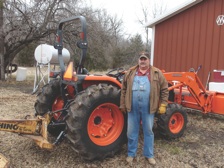
Karr also uses a Kubota MX5100 four wheel drive tractor to help maintain the camp. The tractor is primarily used for road maintenance, mowing, and moving heavy objects with the front end loader and pallet forks. Occasionally it is utilized for agricultural work when aiding the Noble Foundation’s forestry works around the camp.
Camp Simpson began it’s rich scouting heritage in the early 1930’s. Located on a former Delaware Indian relocation site the camp’s small beginnings were started by the late Rev. Harry Miller, a Scout Executive for the former Pontotoc Council. Funding for the property was made possible by civic leaders such as R.W. Simpson and M.O. Matthews as well others. Over the years Camp Simpson has grown from its 120 acre site to an impressive nearly 2,500 acre camp complete with 12 campsites and a variety of scouting facilities.
Built and dedicated for the love of scouting, Camp Simpson hosts group camps about 46 weeks a year. These include Boy Scouts as well as other public groups. Much like the qualities of a Boy Scout, the Kubota equipment prepares the camp for it’s visitors with trustworthiness. A helpful daily tool for Karr: the Kubota equipment he uses plays a vital role in every aspect of preparation and maintenance of Camp Simpson, and with the Kubota’s fuel efficient engines you might even say they are thrifty.
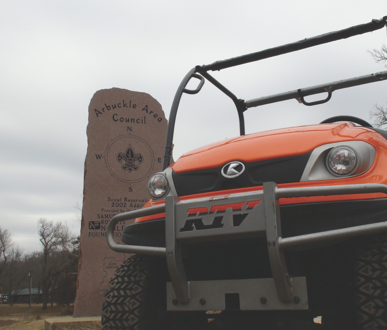
Kubota equipment keeps Camp Simpson Ready for Boy Scouts
The Kubota equipment was purchased for the camp a little over a year ago. The decision to go Kubota was made in part by a few board members but mostly because Great Plains was willing to go the extra mile in giving a great deal. In just a little over a year Karr has put over 500 hours on the RTV. This has impressed him with the RTV’s capabilities and it’s durability. He commented on the fact that it has not given him any problems.
“I can do just about anything I want to in it. All you have to do is put it in low, four wheel drive and I could probably climb a tree if I really wanted to. It has all the qualities a utility vehicle should have,” Karr said.
Maintenance equipment wouldn’t be effective without proper maintenance of the equipment itself. Karr performs all the general maintenance on the Kubotas and commented that he sticks to the manufactured recommendations.
Karr said, “ These machines are easy to keep up. I think because they are so accessible and easily maintained, I can get more done. I am not spending long hours keeping them up. The RTV is my main means of transportation so it can’t afford much down time.”
Both the Kubota utility vehicle and the tractor play an important part in maintaining and preparing Camp Simpson for its visitors. The RTV 500 however seemed to be a part of everything that Karr does at the camp. He uses it for daily reliable transportation as well as other things such as the horsepower for prescribed burns. Perhaps one of the aspects he likes best about the RTV is that it is open. The fact that he is not enclosed in a truck cab enables Karr to connect with the camp on a closer level as he covers its grounds. Even the animals seem to be comfortable with its presence as they recognize the Kubota RTV when it comes climbing over a hill.
Karr has been Camp Ranger at Simpson for about eight years now. He has been involved with scouting for over 30 years and loves working with youth. The most rewarding feature for Karr about taking care of a large scout camp is the time spent working with the kids. Karr sees the values that are taught to young scouts, such as being trustworthy, loyal, helpful, and thrifty, in the Kubotas which he uses daily to prepare Camp Simpson.
The Kubota equipment that is used at Camp Simpson reflects the dedicated work of Rangers such as Karr, and although this work is done after hours, and behind the scenes, it is their work that makes the grounds ready for future scouts and their lifetime of memories and values.
Polaris News - See What is new for 2013
As a marketing company Polaris continues to make advances with its product line. The Rangers of old are hardly recognizable when compared to the newest models, and their ATVs continue to transform. Year after year the company’s off road vehicles make advancements that keep Polaris at the head of the pack.
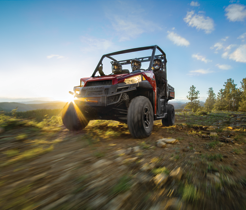
RANGER XP 900 - Polaris has unleashed a machine that has created a whole new class of utility vehicle. Still the hardest working, smoothest riding, the Polaris Ranger XP 900 features a new ProStar 900, 60HP engine with incredible class-leading torque across the power band. This power lets drivers tow up to one ton, or haul up to 1,000 lbs. in the cargo box.
In a long list of smooth riding Rangers over the years this is the smoothest riding yet, in part because of the new center spine chassis with greater rigidity, a five inch longer wheel base, and an added inch of suspension travel. Travel on your place undetected in this quite model do to engine placement behind the seat, and below the box.
Travel farther with enhanced comfort and superior ground clearance. With 12 inches of ground clearance obstacles are easily handled, and the redesigned cockpit will fit more people more comfortably. It features a three person split bench seat that is slightly lower allowing more storage and enhanced driver comfort.
Master the elements with the new Ranger cab systems that are pre-designed for the Ranger XP 900 frame. The new Lock & Ride PRO-FIT Cab Systems can take less than five minutes to install! The windshields, roofs, rear panels, and doors lock tight and will exceed your performance needs.
RANGER 800 EFI MID-SIZE - Created by demand, the Ranger 800 Mid-Size gives the benefits of a full size utility vehicle in a midsize frame. Without sacrificing power for versatility, the Ranger 800 Mid-Size can reliably handle a wide range of terrain, while producing higher levels of payload capacity.
SCRAMBLER XP 850 H.O. - This is definitely not your Daddy’s Scrambler. Created for power sports enthusiasts, the all new Scrambler XP 850 makes its predecessor look like a youth model. Its lightning quick acceleration and smooth power are delivered by a high output 850 Twin EFI 77 HP engine. With the legendary Sportsman style independent rear rolled suspension, and its 10.25 inches of ground clearance, handling rough terrain at higher speeds has never been smoother.

One Man’s View
Like most ranches, the RC-LK’s rich history would take more than a single page to sum up. Likewise the same could be said for what Leonard Ketchum, Ranch Manager at the RC-LK Cattle Co. had to say about their Kubota RTV’s and the die hard Lamco Feeders he distributes.
It is becoming common practice to use utility vehicles as a main source of transportation on farms and ranches. The Kubota RTV series is a cost effective machine that delivers durability for a long versatile life. Since the ranch began using the RTV’s for transportation Ketchum has almost completely retired his truck, because the nearly 4,000 acre ranch is completely connected it allows Ketchum to travel to various ranch locations without leaving the property. In fact he commented on the fact that he uses his truck so infrequently and the RTV so often that when he does get in the truck to go to town the battery will be dead! Ketchum talked about his use of utility vehicles.
“We have lots of side by sides here at the ranch, three of which are Kubotas. I like different things about each model and manufacturer we have but what I like best about the Kubotas are their dependability. I do all my feeding off a tractor but the rest of the time I’m driving the Kubota. To give you an idea on how much I depend on the RTV, I have put over 600 hours on it since March. For obvious reasons I like the RTV1100 the best. You just can’t beat the cab and it will go anywhere I want it to,” Ketchum stated.
Ketchum’s grandfather bought the first two sections in 1927 of what is now the RC-LK cattle company. Four years ago, his best friend Randy Craft purchased the ranch and still uses it primarily for cattle production. The ranch has some agricultural purposes including wheat and hay pastures and it is host to family and friend gatherings. In a welcoming way, the large vast entirety of the ranch creates a feeling of isolation. In fact one person described it as its own place. It doesn’t seem like you’re in Oklahoma nor any particular county or town for that matter, just its own place.
When not graciously giving me a tour or feeding cattle you might find Ketchum checking one of his Lamco feeders. Every four days Ketchum has to check the feeders for which he is the Oklahoma distributor. When asked how he became the Lamco distributor he had this to say.
“We have used Lamco feeders here on the ranch for over 20 years! They are made for south Texas salt air so they are already much tougher
than ones you find around
here. Plus the hogs haven’t
uprooted one yet, ” said
Ketchum.
For one man’s view the Kubota RTV series is the perfect vehicle for a large ranch operation such as the RC- LK Cattle Co.
and judging by the interview they will be using them for a long time.
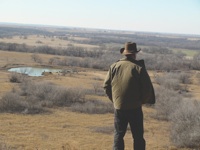
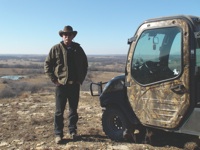
Leonard Ketchum of the RC-LK Cattle Co. gives his take on the Kubota rtv & lamco feeders
ATV”Ing” In the mountains
Great Plains customer rick nolan brings gpl to full circle with his trail riding article
It is often said, planning for a vacation is half the fun. Whether or not you find trip planning to be an enjoyable part of the experience or an unavoidable yet necessary evil, planning will often keep your vacation on track. It seems counter intuitive to include a jacket, wool socks, insulated boots, and gloves on a summer vacation pack list. After all, the daily forecasted high temperatures during the week away from the daily-grind are north of 100 degrees.
My wife Marilyn and I enjoy spending our summer vacations in the mountains of either Colorado or New Mexico, where the aforementioned winter cloths become a necessity required to stay comfortable in the high altitudes, where temperatures often are near the freezing mark. Each summer, when the thermometers in Oklahoma are reading triple digits, it is time to head west with our off-highway-vehicle (OHV) in tow. Planning an OHV or ATV vacation is necessary to ensure an enjoyable and safe trip. Back country travelers would be ill advised to venture into the mountains without being properly prepared.
There are thousands of miles of ATV/Jeep trails in the western states. Far too many locations to cover in the limited space we have here. A few hours spent surfing the internet should reveal an area that meets your expectations. To get started on planning a trip, here are a couple of our favorite destinations and some pointers for consideration.
Red River, New Mexico was established in the 1870’s and is located in north central New Mexico in the heart of the Sangre de Cristo Mountains and the Carson National Forest. At an elevation of about 8,600, Red River is a relatively short 550 mile drive from Oklahoma City. This picturesque ski village fills with Okies and Texans each summer, many pulling trailers loaded with ATVs destined to enjoy the miles of trails found near town.
Near the town of Red River is Goose Lake Trail, the Greene Peak Trail, the Forth-of-July Canyon, Midnight Meadows, the Pioneer Canyon Trail and the Old Red River Pass Trails. These trails range from easy to moderate in the difficulty. Each trail offers scenic views along the way and at the trail destinations. Marilyn and I have made the trek up these trails many times over the years. Last summer was the most memorable for me when we took two of our grandsons along for their first trip to the mountains. When we arrived at Greene Peak, our 7 year old grandson Grayson got off the UTV, took off his helmet, looked around for a moment, and simply said, “This place is fricking amazing!”
Whether fishing in Goose Lake or in the Red River that runs through town, shopping in the many shops of town or spending time on the miles of off-road tails, Red River is worth considering as an ATV vacation destination.
The Alpine Loop National Back Country Byway is located in southwest Colorado in the San Juan Mountains. Access to the Loop is easy from Ouray, Lake City or Silverton, Colorado. The Loop passes by ghost towns, abandoned gold and silver mines, waterfalls, river valleys, alpine tundra and scenic passes. Many of the meadows and tundra can be reached by passenger vehicles; however a high-clearance four wheel drive or ATV is required to traverse the entire loop.
The Alpine Loop is remote, rugged and offers spectacular views along the 63 miles of off-road back country trails. Crossing two 12,000 foot passes, Cinnamon and Engineer, the Loop was built in the late 1800’s by miners who used it to transport ore to Silverton, Ouray, and Lake City in mule-drawn wagons.
The ATV and Jeep trails in and around the area range from easy to downright scary. The Last Dollar Road and Owl Creek Pass trails are easy, Yankee Boy Basin and Ophir Pass are moderate in difficulty and trails like Corkscrew Gulch, Engineer Pass and Imogene Pass are considered difficult. The most experienced off-road enthusiast should only attempt Black Bear Pass and Poughkeepsie Gulch.
Most of these trails are open by mid-June but it is advisable to call ahead to make sure they have been cleared and are passable before making the trip. Red River is usually open by the start of the summer season in June. The Alpine Loop may open a little later depending on the winter snow fall.
Summer temperatures in the towns of Red River, Lake City and Ouray generally range from the low forties at night to the upper seventies or low eighties during the day. Once you hit the trail expect to be reaching for a jacket as you gain altitude headed for 12,000 feet. In many places along the trails you will pass snow that never completely melts each year. Don’t pass on the opportunity to enjoy an old fashion snowball fight along the way. Red River temperatures are generally not as cool as the temperatures you will encounter along the Alpine Loop. Make sure you pack rain gear. During the monsoon season, which begins in the summer, afternoons normally bring a rain shower along with some lighting, sleet and even snow at the higher elevations.
A word about altitude sickness, which occurs when you cannot get enough oxygen from the thin air at high altitudes. Many flat landers accustom to living in relative low elevations in Texas and Oklahoma, experience headaches, loss of appetite or have trouble sleeping at higher altitudes. Mild altitude sickness is common and it affects some and has no affect to others. Altitude sickness can be dangerous and you should be prepared in case you or someone in your group experience symptoms. The best treatment for altitude sickness may simply be to seek a lower altitude. If you have mild symptoms, you may be able to retreat to a lower altitude for a short period and let your body get accustomed to the low oxygen levels. Drinking plenty of water helps, but do not drink alcohol. Your family doctor may prescribe medications such as Diamox, which speeds up how fast your body gets used to the higher altitude. You are wise to learn about altitude sickness, its symptoms, and how to treat it before you head west.
Tread lightly and stay on designated ATV trails. Slow down when your line of sight is limited and cross streams slowly to minimize erosion. Follow all road signs and never cross barriers put in place to limit ATV access. Do not disturb historical sites, leaving them as they were found. Sensitive areas like tundra should be avoided. Avoid “spooking” livestock and wildlife by slowing down and keeping your distance. Motorized vehicles are not allowed in designated Wilderness Areas.
Always be considerate of other riders, pull to the side and let faster vehicles pass. Never drive by anyone that appears to need help. If going through gates, leave them as you find them. Yield the right of way to riders going uphill, to mountain bikers and hikers. Slow down and proceed with caution around horses; sudden, loud or unfamiliar activity may spook animals. When encountering horses on a trail, move to the side and stop. It is a good idea to turn off the engine and speak softly to the rider. Slow down around crowds and in camping areas to avoid noise pollution and to keep your dust trail to a minimum.
It is advisable to travel with other riders to help each other in the event of an accident or mechanical breakdown. Have a pre-arranged rendezvous in case you are separated from your group. If traveling with friends or relatives a two-way radio can make the trip more enjoyable and safer. Cell phones often have limited or no service in the back country. Understand and respect your level of experience and limitations. Never let your “want to overload your know better,” and put yourself or your equipment at risk. Know your equipment’s limitations, including fuel capacities and range, carry extra fuel if needed. Never push yourself or your equipment beyond it’s capacities. Alcohol or drugs do not mix with ATVs and mountain trails, their use often resulting in disastrous results.
Having a map and a GPS is a good idea. Check weather forecast before starting each day, a weather radio is smart. Understand the rules, regulations, restrictions, signs, closures and what permits may be required in the area. Off-road use laws are meant to protect both trail visitors and the land. Always tell someone your planned route and when you expect to return. Wear a helmet, eye protection, appropriate clothing and other safety gear. Keep an eye on the time, coming off the mountains in the dark may bed not as much fun as you might think.
Make sure the ATV is mechanically sound. Consider having it properly tuned for high altitudes. Pack a bag with emergency items for both you and the ATV. Be prepared with a first aid kit, flashlight, basic tools, a tire repair kit and pump, tow strap and anything you may need to get back to town. A winch on the ATV may come in handy as well.
Lastly, have fun. The mountains can be a wonderful place to get away and escape the almost unbearable summer temperatures here at home. If I can help in planning your trip drop me an email at rick@nolanoutdoors.com. Perhaps we will cross paths on the trail this summer. Planning may be half the fun, but being there is the other half. Travel safe.
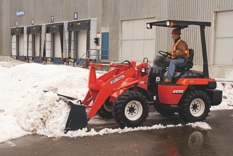
Kubota r-Series Wheel Loaders
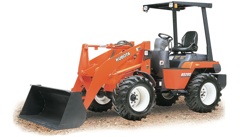
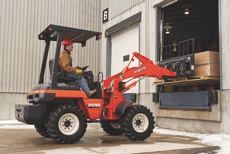
Equipped with sate of the art features, the versatile R-Series wheel loaders from Kubota offer outstanding visibility, power, and productivity.
Kubota Diesel Engine
The R-Series loaders utilize Kubota’s own 41.6 and 46 T-TVCS diesel engines. The clean running Kubota engines offer power and dependability, with superior horsepower and performance. The low noise and vibration levels reduce operator fatigue, allowing long hours of continuous use. The four wheel drive limited slip differential and rear frame oscillation provide excellent traction and stability. This allows you to out muscle challenging terrain, such as mud, sand, and snow. When loose or soft terrain causes a front wheel to lose its grip, the Limited Slip Differential transfers that wheel’s power to the opposite wheel to restore traction. Another nice feature is the electronic shuttle shift lever. Increase production with on the fly shifting. Mounted on the steering column, this timesaving, labor reducing feature lets you shift from forward to reverse to forward without ever clutching or breaking.
Load Sensing Transmission (LST)
Load Sensing Transmission automatically adjusts speed and torque in response to load conditions. To operate more efficiently, this innovative feature enables the R-Series loaders to automatically shift from high speed/low torque to low speed/high torque as load conditions vary. For optimal operation in tight spaces, the travel speed limiter reduces maximum travel speed with just a touch of a button, while maintaining full performance of the auxiliary hydraulics.
Auxiliary Hydraulics
As a standard feature in both models operators will save time and money whenever a hydraulically operated attachment is needed. Unlike most competitors the Kubota R-Series wheel loaders offer greater versatility with hydraulics plumbed to both front and rear, enabling usage of a backhoe when a job demands it.
Features
For easy dumping into trucks with higher beds the R-Series has the highest dumping clearance in it’s class. The fully adjustable suspension seat adjusts to provide a high level of comfort to a wide range of drivers. The hanging style foot pedals increase foot space. Combine these together to make up the best loader in its class.
Kubota Leasing Q&A
GPL: What is Kubota Leasing?
RC: Kubota Leasing is a group that was created to help provide more options to Kubota’s commercial and municipal customers. Kubota Leasing provides the customer with several leasing options across the entire spectrum of Kubota Product.
GPL: How is a lease different from “normal” financing or paying cash?
RC: The customer has several options to choose from.
The Fair Market Value, (FMV) lease gives the customer the lowest payment with two end of lease options. They can buy if for the true Fair Market Value, (determined at the end of the lease) or return the equipment to Kubota Leasing.
The Fixed Price Purchase Option, (FPPO) lease has a slightly higher payment, however the exact purchase price is stated at the start of the lease a and the customer knows exactly what their purchase option will be. At the end of the lease the customer can either buy the equipment for the FPPO or return it to Kubota Leasing.
These two leases provide off balance sheet financing because the customer has the option to return they equipment if they don’t want to purchase it.
The third lease is a Finance Lease, which the customer makes payments throughout the term and when the last payment is made the customer takes ownership of the equipment.
• There are many types of leases available through Kubota Leasing including several customer plans.
• However, the main difference when using a lease is that the leasing company is the true owner of the equipment and the end user pays the lease for the use of the equipment for a set amount of time (usually 24 or 36 months) at a set rate per month.
• At the end of the lease the customer may have several options, (based on the type of lease agreement) which may include purchasing the equipment from the lease company, extending the lease, upgrading to newer and/or larger equipment, or simply returning the equipment to the lease company.
GPL: So why would a commercial operator lease instead of buy?
RC: There are several reasons why a lease may be a better option for a commercial user. Some of these reasons are:
• Lowest monthly cost: Most lease payments will be less than a payment for a “standard” purchase.
• Tax Benefits: In some cases, the customer can deduct the monthly lease payment as an operating expense. Please check with your own tax advisor.
• 100% Cost Coverage: A dealer and customer can include “other” fees into the lease agreement including things like training, maintenance, and Kubota Extended Warranty.
• Obsolescence Protection: At the end of the lease, the customer has the flexibility to upgrade, downgrade, or simply get a newer model as they see fit.
• Easier Budgeting: With 100% cost coverage, a customer can plan much of the operating cost in advance and include those expenses into the lease amount. This creates better month to month expense planning and allows for maintenance to be paid over time, not as one lump sum.
• Preserves Credit Lines: Leasing equipment does not tie up the customer’s line of credit, so the customer will have more credit available if and when they need it.
• Flexible Payment Options: Payments can be structured to meet the customer’s needs based on their cash flow needs.
GPL: If a commercial customer is interested in Kubota Leasing, how can they get more information on it?
RC: Leasing is fast and easy – we take care of everything call us at 855-222-3955 or visit the Kubota Leasing website at: www.kubotaleasing.com, or see Great Plains Kubota at any location, or call 855-4KUBOTA.
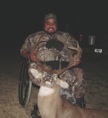
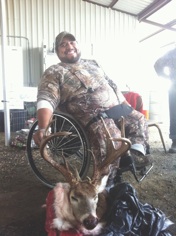
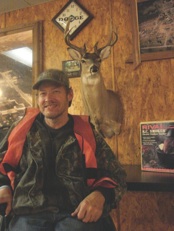
Imagine if something as simple yet pleasurable as a morning deer hunt wasn’t possible without physical assistance. One organization has been helping people with disabilities enjoy the outdoors through fellowship and many volunteered man hours. By creating hunting opportunities, the Oklahoma Outdoor Outreach has transformed their members’ lives and made outdoor activities not beyond their reach.
Founded in 2007, the Oklahoma Outdoor Outreach is a non-profit organization that was formed to provide disabled, chronically, and terminally ill individuals the opportunity to enjoy the heritage of outdoor sporting activities. For five years this faith-based organization has touched countless lives through the sharing of God’s great outdoors. Organization President Tim Slavin has dedicated over ten years to offering those in need a chance to what he feels is a great way to build confidence and a relationship with God.
“Our organization really builds self esteem for our members. The adults members are a little different from the younger kids but still everybody gets a boost. The kids sometimes don’t know much about hunting or life in general. I recall the first child I took hunting who was twelve at the time and is now 22 years old. I’ve seen him progress and grow up and to understand what hunting as well as what the love of Christ, means. He has seen both sides of our group and what people are willing to do to help. This organization has built memories and confidence for our members which are life lasting and priceless,” Slavin said.
Volunteers such as Slavin are the driving force that make Oklahoma Outdoor Outreach possible. The activities held by the group, such as hunting, create a time to build esteem while sharing the works of the Lord. Members and volunteers share in fellowship and get to spend time in God’s creations. Members are offered time away from hospitals, cities and daily routine and get a chance to sit in a hunting blind and watch a sunrise with Mom or Dad and a guide. This opportunity creates an understanding of what things are about in nature. Breaking up the monotony of sitting at home playing video games or looking at Facebook is what a lot of our kids need. In a country that is quickly loosing its connection with the outdoors and spending time in God’s creation, it is important to have a group like this not only for the children but for the adult members as well.
Oklahoma Outdoor Outreach is not about shooting a deer or turkey; it is about fellowship and family. As a family organization they encourage every member of the family to participate in their activities. On the occasions where a Sunday overlaps, which many of them do they will have Sunday service. Usually a guest speaker will share testimony or a pastor will come and speak. The group even takes communion from time to time.
Slavin spoke about the other activities their organization holds:
“We have hunts, trap shoots, archery, fishing and camping events, but we also share a lot of fellowship. We have done camps for Children’s Hospital for a number of years, and we always have a youth deer hunt, adult deer hunt and a spring turkey hunt. During the turkey hunts we have a turkey calling contest for the kids in which they win prizes. Talk about special! It’s wonderful to see the hard work that the kids put into it. We are always raising money for prizes to give back to the volunteers, kids, and guides to show our appreciation.”
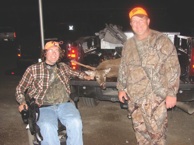
This year’s deer hunt was held during the last weekend of rifle season in Murray county at the donated facility of the Murray County Antique Tractor and Implement Association. The event held a combination of silent auction and BB-Q dinner as a fund-raiser. Over 200 people came for the dinner where the Oklahoma Outdoor Outreach served 36 slabs of ribs sides for their guests and members.
The guides and volunteers were from the local areas and all hunting took place on private land that had been provided for the hunt. Eleven hunters harvested four bucks and five does this year. The hunts themselves are a major undertaking. It takes time to scout and prepare the hunt as well as organize, the actual hunting locations. Oddly enough, not one person on this organization’s board has a child or family member that is disabled in any way which personally says something about the organization. As a group that is dedicated to helping others the Oklahoma Outdoor Outreach is a volunteer only organization. There aren’t salaries and what money the group has is generated by fund-raising.
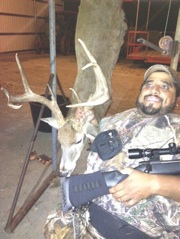
Jose Rivera, is one member who has benefited from this group and is passionate about hunting. Hunting can always be appreciated when you shoot the deer of a lifetime. During this year’s hunt Rivera shot a very large eight point buck nicknamed “Palmetto” by Great Plains salesman, Levi Garrett. Garrett had been managing Palmetto for years and has watched him grow into a mature trophy. When Garrett heard news of the deer being shot he graciously brought all “Palmetto’s” sheds to Rivera and shared some of his encounters with the monster buck to the group. Slavin and Rivera were impressed with Garrett’s sportsmanship and how he understood how important this was to Jose and the organization. When asked, Rivera had this to say about Oklahoma Outdoor Outreach:
“They are like family. I’ve never met a group like this. We just get together and have a great time and they don’t treat you like a charity case. I always have a great time at the hunts even if I don’t harvest a deer,” said Rivera
Slavin spoke about the rewarding aspects he gets personally.
“To see what the members of this organization get out of their time, whether it be the hunters themselves or even the guides is why I do this. It has gotten to the point where the work that we do is as important to us as it is to them,” said Slavin.
As long as the organization can continue to raise money and the passion to help others is there, the Oklahoma Outdoor Outreach will continue to provide a means of spiritual and personal growth for those in need. Like other non-profit organizations there are needs to be met and like a page from their member’s lives, struggles to overcome, but nothing great has ever been achieved without struggle which makes the Oklahoma Outdoor Outreach appreciate what they have achieved even more.
If you are interested in the Oklahoma Outdoor Outreach Foundation and would like more information visit their website at www.oklahomaoutdooroutreach.org, like them on Facebook, or call Tim Slavin at
405-826-7286.